
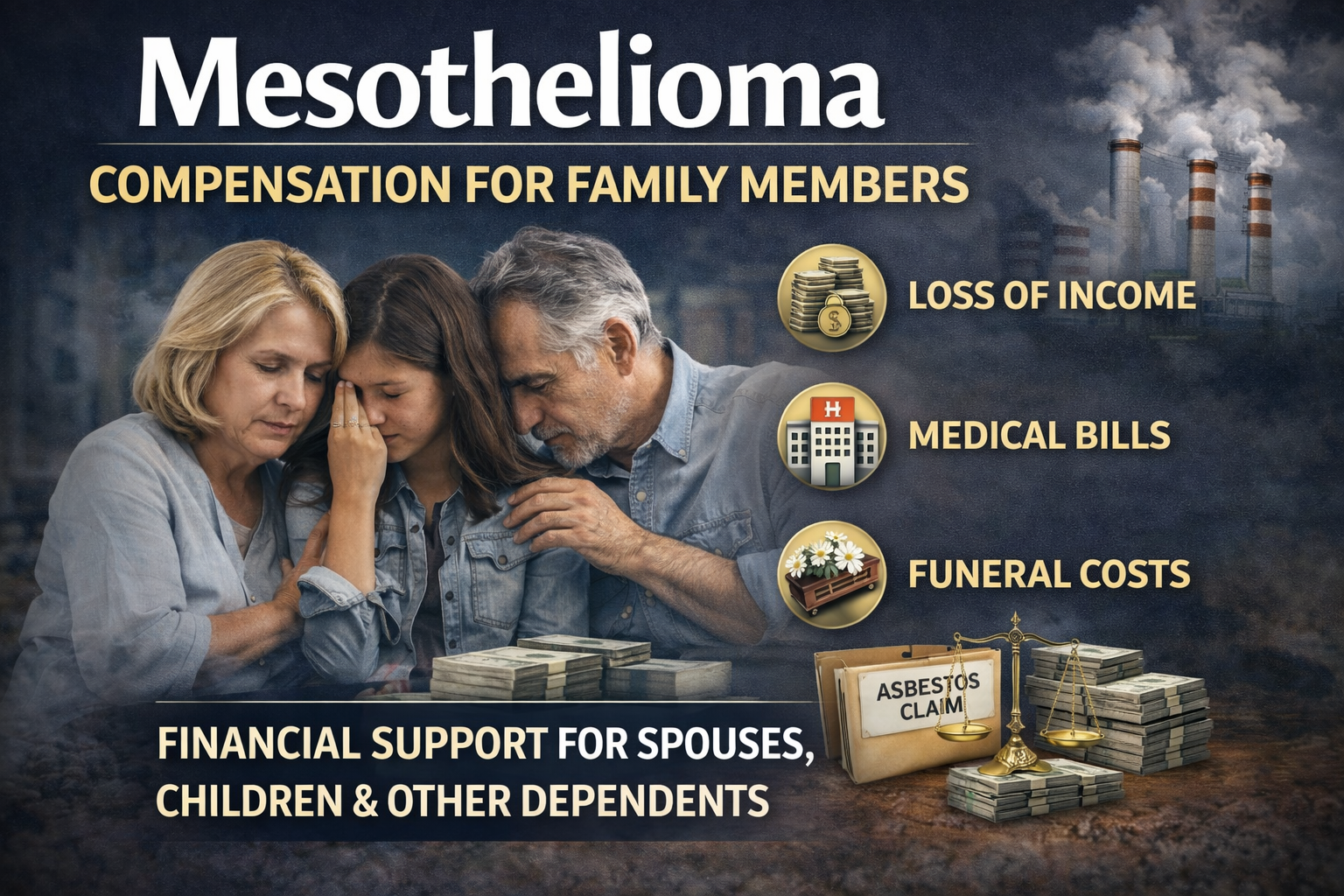
Mesothelioma Compensation for Family Members: Securing Financial Justice After Loss
Losing a loved one to mesothelioma hits hard. This rare cancer stems from asbestos exposure and often proves fatal within months of diagnosis. Families left behind face not just grief but also mounting bills and lost income—yet legal options exist to seek compensation for that pain.
You might wonder if you can hold companies accountable for the asbestos that caused the illness. The answer is yes. Surviving relatives have rights to file claims after a death from mesothelioma. This guide walks you through the process step by step. It covers legal paths, types of damages, and key steps to take. By the end, you’ll know how to start pursuing the financial support your family deserves.
Legal Avenues for Mesothelioma Compensation After Wrongful Death
Families often turn to the law after a mesothelioma death. Compensation comes from companies that made or used asbestos products. These firms knew the risks but hid them for years. Now, relatives can step in to claim what’s owed.
Wrongful death suits target the harm done to the family. Survival actions focus on the victim’s suffering. Both aim to deliver justice. Trust funds from bankrupt companies offer another route. Each path has its rules, but all seek to ease the financial burden.
Wrongful Death Claims vs. Survival Actions
A wrongful death claim lets family members recover for their own losses. Think of it as payback for the empty chair at dinner or the missing paycheck. Courts award money for lost companionship, guidance, and financial support the deceased provided.
Survival actions differ. They continue the victim’s personal injury case after death. The estate gets funds for the pain, medical bills, and lost wages the person endured before passing. In some states, you file both claims together. This combo maximizes recovery—often reaching millions in big cases.
For example, a 2024 jury in California awarded $25 million in a wrongful death suit against an insulation maker. The family lost a father who worked in shipyards. Such verdicts show the power of these claims. Always check your state’s laws, as they shape what you can pursue.
Eligibility and Beneficiaries Under State Laws
Who can file varies by state. Spouses top the list as primary claimants. Children, parents, and sometimes siblings follow if no spouse exists. Grandchildren or domestic partners might qualify too, depending on the rules.
Time limits matter a lot. Most states give two to three years from the death date to file. Some start the clock at diagnosis. Miss it, and you lose your chance. In Texas, for instance, the limit is two years from death.
- Spouses: Often get priority for emotional and financial losses.
- Minor children: Courts protect them with higher awards for future support.
- Parents: Eligible if the deceased had no kids or spouse.
- Extended family: Rare, but possible in close-knit cases.
Talk to a lawyer early. They know local rules and can spot if you qualify.
The Role of Asbestos Trust Funds
Bankrupt asbestos companies set up trust funds years ago. These hold billions for victims and families. Over 60 funds exist, like the Johns Manville or Celotex trusts. They pay out without a full trial.
The process is faster than court. Submit proof of exposure and diagnosis. Funds review and approve claims in months, not years. Payouts average $50,000 to $200,000 per claim, based on severity.
No lawsuit needed here. Families file directly with the trust. If the deceased already started a claim, you continue it. This option shines when companies no longer operate. In 2025, trusts disbursed over $3 billion—proof they still deliver relief.
Types of Compensation Available to Mesothelioma Families
Money from these claims covers real needs. It replaces lost income and pays debts. Courts break it into economic and non-economic parts. Punitive awards add sting to negligent firms.
Expect varied amounts. Small settlements hit $100,000. Large ones top $10 million. Factors like exposure proof and family size influence the total.
Compensating Economic Losses
Economic damages hit the wallet directly. Funeral costs average $7,000 to $12,000. Add burial expenses, and it climbs. Claims cover these fully.
Medical bills pile up fast. Treatments like chemo or surgery run $100,000 or more. Even if insurance paid some, families seek the rest from liable parties.
Lost income forms the big chunk. If your loved one earned $60,000 yearly, courts calculate future earnings over their life expectancy. A 50-year-old worker might claim $1.5 million or so. Benefits like pensions count too. This money helps families stay afloat.
Non-Economic Damages: Valuing Loss of Consortium and Support
You can’t put a price on hugs or advice. Yet courts try. Loss of consortium covers the end of shared life with a spouse—intimacy, teamwork, joy. Juries award $500,000 or more for this.
For kids, it’s guidance lost. A parent who taught bike riding or helped with homework leaves a void. Awards reflect that emotional gap.
Support includes daily help, like driving kids to school. States value these differently. In New York, a 2023 case gave $2 million for a mother’s lost role. These damages make the claim feel whole.
Punitive Damages and Holding Corporations Accountable
Punitive damages punish bad actors. They go beyond fixing losses. Courts award them when companies acted with gross disregard—like ignoring safety warnings in the 1970s.
Proof needs strong evidence. Show the firm knew asbestos killed but kept selling it. Awards can double or triple the base amount.
A Pennsylvania verdict in 2025 hit $30 million in punitives against a brake maker. It set an example. Not every case gets these. Juries decide based on facts. They deter future risks.
Navigating the Claims Process: Steps for Families Seeking Justice
Start right away. Delays hurt your case. Gather papers and find help. The road twists, but clear steps lead to results.
Proof builds your claim. Deadlines loom large. Lawyers guide the way.
Establishing Proof of Asbestos Exposure and Causation
Link the death to asbestos first. Work history proves exposure. Old pay stubs, union cards, or coworker statements show jobs in mines, factories, or construction.
Medical records seal causation. Doctors note mesothelioma from asbestos. Biopsies or scans confirm it. No other cause fits this cancer.
Experts help here. They review files and testify. In one case, a plumber’s family used 40-year-old photos of dusty work sites. That won $1.2 million. Keep everything—it’s your foundation.
Filing Deadlines and Statute of Limitations Considerations
Act fast on time limits. Most states clock from death. Others use diagnosis or discovery of exposure.
California gives two years from death. Florida starts at awareness of the claim. Extensions rare, but some for hidden facts.
Check your state online or with a lawyer. In February 2026, new laws in Illinois extended limits for old exposures. Don’t guess—verify.
- Note the death date.
- Research your state’s rule.
- File before it runs out.
Working with Specialized Mesothelioma Attorneys
Pick a lawyer who knows asbestos cases. They track thousands of suits and spot weak spots. Firms like Simmons Hanly Conroy handle hundreds yearly.
Contingency fees mean no upfront cost. They take 33% to 40% from winnings. You pay nothing if you lose.
Look for free consults. Ask about past verdicts. A good one builds trust fast. They file papers, negotiate, and fight in court. Your case deserves that edge.
Special Considerations for Different Family Situations
Not all families fit one mold. Spouses and kids get key protections. Intestacy complicates things. Veterans have extra paths.
Tailor your approach. These tweaks boost success.
Claims Involving Surviving Spouses and Minor Children
Spouses lead wrongful death claims. They claim lost partnership and income. Courts often award more for marriages over 20 years.
Minor children shine in dependency. Under 18 gets priority for education funds. A Texas family won $5 million in 2024 for a dad’s death—split for two kids’ futures.
Protections include trusts for minors. This keeps money safe till adulthood. Spouses guide the process but share awards fairly.
Handling Claims When the Deceased Died Without a Will (Intestacy)
No will means state laws divide assets. Compensation goes to the estate first. Probate court sorts it out.
Spouses get half in most states. Kids split the rest. Parents inherit if no direct heirs.
File as estate rep. A lawyer handles probate alongside the claim. In Ohio, intestate rules favored a widow over siblings. It added $800,000 to her share. Plan ahead if possible, but don’t let it stop you.
Claims Involving Veterans and Government Sites
Veterans face unique exposures. Shipyards and bases used tons of asbestos till the 1980s. The VA offers benefits like disability pay.
Civil claims target makers, not the government. Feres doctrine blocks suits against the military, but private firms pay.
Resources include the VA’s asbestos program. In 2025, over 10,000 vet families got aid. Pair it with trust funds. A Navy vet’s widow claimed $300,000 from a fund last year. Double up for full relief.
Conclusion: Securing the Financial Legacy and Finding Closure
Mesothelioma compensation for family members eases a tough road. From wrongful death suits to trust funds, options abound. Economic losses get covered. Emotional voids find value. Deadlines press, but proof and lawyers pave the way.
Key steps stand out: Document exposure now. Consult an attorney today. Act before limits expire. Special cases like vets or no-will scenarios need tweaks, but justice fits all.
Your family’s fight matters. Compensation honors the lost life. It builds a stable future. Reach out to a specialist firm. Start the claim. You deserve that peace.
Related posts:



Related posts:
 Mesothelioma Lawyers – Claims & Compensation 2026
 Asbestos Lawsuit Claim 2026
 What is the statute of limitations on asbestos claims
 mesothelioma lawyer asbestos
 mesothelioma lawyer asbestos cancer lawsuit
 asbestos mesothelioma lawyer
 mesothelioma attorneys near me
 mesothelioma lawyer directory
 lawyers for mesothelioma
 firm law mesothelioma
 mesothelioma firms
 asbestos mesothelioma lawyers
 mesothelioma lawyer new york
 Mesothelioma Lawyer: How to Choose the Best Attorney & Average Compensation
 Best Mesothelioma Attorney in Texas (2026 Guide)
 Find Top Asbestos & Mesothelioma Lawyers Near Me | 2026
 Asbestos Lung Cancer Lawsuit 2026 Filing Guide
 How long do mesothelioma claims take

