
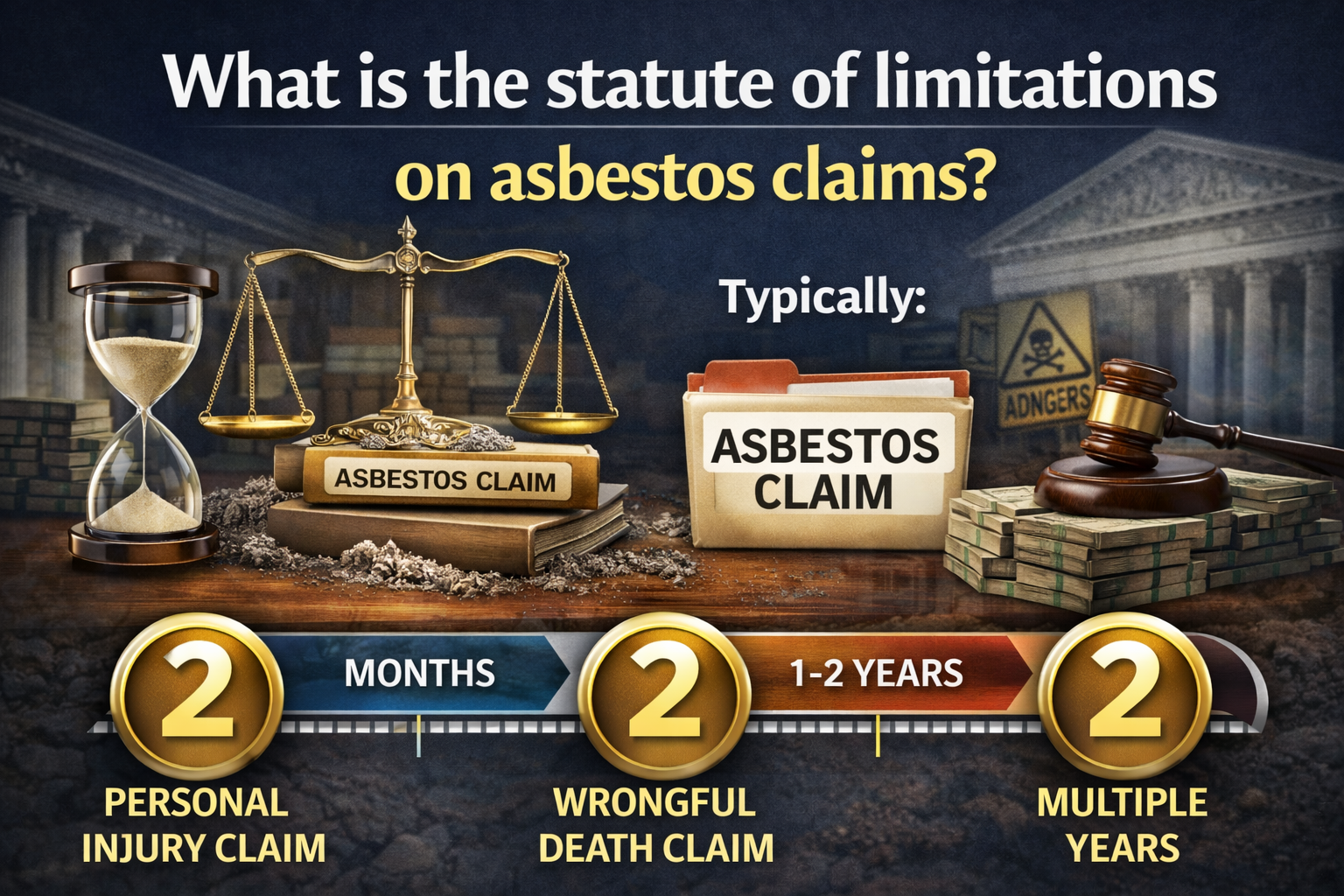
What is the Statute of Limitations on Asbestos Claims?
Imagine getting a call from your doctor. The words hit hard: mesothelioma. Or asbestosis. Your world stops. You think about past jobs, old buildings where dust filled the air. Now, one big question burns: how long do you have to fight for justice? The statute of limitations on asbestos claims sets that tight window. It tells victims when they must file a lawsuit to seek compensation. This deadline changes by state and claim type. Miss it, and doors close forever. We focus on “statute of limitations asbestos claims,” “mesothelioma lawsuit deadline,” and “asbestos compensation” to guide you through this maze.
Defining the Statute of Limitations in Asbestos Cases
What is the Statute of Limitations (SOL)?
The statute of limitations is a law that caps the time to start a legal fight. It starts after an injury shows up or gets found. For asbestos claims, this rule keeps cases from dragging on too long. Courts use it to ensure fresh evidence and fair trials. In simple terms, it’s your deadline to sue companies for harm from asbestos exposure. Each state sets its own rules, often one to three years from diagnosis.
Think of it like a timer on a game show. Once it buzzes, your chance ends. This protects defendants from old claims. But for victims, it adds pressure to act fast. Asbestos cases need this clear line to handle proof of long-ago events.
Why Asbestos Claims Have Unique Timelines
Asbestos hurts slow. Exposure happens years before sickness strikes. A worker inhales fibers in the 1970s. Symptoms wait until the 2000s to appear. Standard injury laws don’t fit this gap. So, lawmakers changed rules for asbestos. They added the discovery rule to start the clock when you learn of the link.
This shift came from court fights and new laws. Before, strict dates blocked many claims. Now, timelines bend for delayed diseases like lung cancer from asbestos. It levels the field for those hit late. Still, you can’t wait forever. Act soon after diagnosis to beat the clock.
Differentiating State vs. Federal Regulations
State laws rule most asbestos suits. Each of the 50 states picks its SOL length. This creates a patchwork. File in the wrong place, and you lose. Federal rules apply in rare cases, like suits against the government. But private claims stick to state courts.
For example, if you lived in Texas but got sick in California, check both. Jurisdiction matters for the tightest deadline. Federal asbestos bans exist, but they don’t set claim times. Always pick the best state for your case. Lawyers help sort this tangle.
The Critical Discovery Rule: When Does the Clock Start Ticking?
Understanding Manifestation vs. Discovery
Some states start the SOL when symptoms first show. That’s manifestation. Others use discovery. Here, the timer begins when you know—or should know—about the disease and its asbestos tie. This rule helps victims with slow-building illnesses.
Manifestation fits quick harms, like a car crash. But asbestos simmers for decades. Discovery gives breathing room. Courts ask: did you ignore clear signs? If not, your start date shifts forward. This keeps fairness in play.
Most states lean toward discovery for mesothelioma claims. It prevents unfair bars on late diagnoses. Yet, proof matters. Show medical records to pin the date right.
Navigating Latency Periods and Delayed Diagnosis
Latency means the long wait from exposure to illness. Asbestos fibers scar lungs over 20 to 50 years. Early signs mimic colds or smoking effects. A cough gets shrugged off. Then, a scan reveals the truth.
Doctors sometimes miss it at first. They blame age or other causes. The discovery rule saves these cases. Courts look at when a smart person would connect the dots. If tests confirm asbestos links months after symptoms, that resets the clock.
Real stories show this in action. A shipyard vet feels short of breath in 2020. Docs say asthma. In 2022, biopsy proves mesothelioma. Clock starts then. Don’t delay checkups. Early finds extend your window.
Exceptions to the Discovery Rule
Tolling pauses the timer in special cases. If a company hides asbestos risks, the SOL waits. Fraud by bosses or makers buys time. Courts toll until the truth comes out.
Minors get breaks too. If under 18 when exposed, the clock holds until adulthood. Same for those with mental blocks or jail time. These rules protect the weak.
Bankruptcy filings can toll as well. If a firm goes under mid-claim, deadlines stretch. Always check for these outs. They turn lost cases into wins.
State-Specific Variations in Asbestos Claim Deadlines
Examples of Jurisdictions with Shorter SOLs (e.g., 2 Years)
Some states keep it tight. Texas gives two years from diagnosis for personal injury. Florida matches that. Strict courts enforce it hard. Miss by days, and you’re out.
These short windows push quick action. In New York, it’s three years, but discovery twists it shorter sometimes. Data from 2023 shows over 1,000 claims filed there yearly. Short SOLs weed out weak suits fast.
Why so brief? Lawmakers cite evidence fade. But victims say it’s unfair for late finds. Check your state ASAP. Tools online list basics, but pros confirm.
States Applying Longer Statutes Post-Discovery (e.g., 3-4 Years)
Other places offer more time. California starts at one year from discovery, but caps at three from exposure knowledge. Illinois gives five years total, with two from diagnosis.
Pennsylvania leads with two years, but tolls for concealment. This helps old exposure cases. In 2024 stats, longer states saw 20% more filings. They balance victim rights with defense needs.
Even here, “discovery” fights shorten windows. A vague symptom date cuts months. Research your spot. Variations surprise many.
- California: Up to 3 years post-discovery.
- Illinois: 5-year outer limit.
- Pennsylvania: 2 years, with extensions.
Wrongful Death Claims vs. Personal Injury Claims
Personal injury suits seek cash for living victims. Wrongful death flips it—for families after loss. The clock often starts at death date, not diagnosis.
States differ. In Ohio, personal injury is two years from discovery. Wrongful death gets one year from passing. This shift helps heirs act post-loss.
Why separate? Death ends personal claims. New suit covers lost support, pain. Statutes run short to keep grief fresh. Families file fast. Mix-up costs big.
Options Beyond Traditional Litigation: Trust Funds and Claims Deadlines
Asbestos Bankruptcy Trusts and Their Claim Windows
Big makers went bust from suits. Courts set up trusts under Section 524(g). These hold billions for victims. No court needed—just file with the trust.
Deadlines vary by trust. Some want claims within years of setup. Others have open windows but strict proof rules. Over 60 trusts exist, like Johns Manville’s.
In 2025, trusts paid out $3 billion. They cover exposure before bankruptcy. File early. Funds shrink over time.
The Difference Between Court Statutes and Trust Deadlines
SOL bars lawsuits in court. Trust deadlines block payouts from that pot. You might beat state time but miss a trust window. Or sue while claiming trusts.
Courts see trusts as separate. Miss both, and compensation slips. Trusts often need less proof but demand details. Always hit both paths.
One key: trusts don’t toll for SOL. Act parallel. Lawyers juggle this daily.
Actionable Tip: Identifying Applicable Trusts Immediately
Start with exposure history. List jobs, products, sites. Search trust databases online. Groups like AAI track them.
Lawyers scan fast. They match your story to trusts. In weeks, you know options. Don’t guess—get help now.
Steps to take:
- Gather work records.
- Note brands used.
- Contact specialists for trust lists.
- Submit prelim forms quick.
Immediate Steps for Potential Asbestos Claimants
The Essential Role of Legal Counsel in Determining the Deadline
Hire an asbestos lawyer right away. They know state quirks and discovery dates. One call sets your timeline clear.
Pros dig into precedents. A firm like Simmons Hanly handles thousands. They spot tolls you miss. Free consults start the ball.
Delay costs. Clocks tick silent. Experts turn fear to plan.
Document Preservation: Evidence That Must Be Gathered Now
Save everything. Medical reports prove diagnosis and asbestos link. X-rays, biopsies—keep copies.
Job logs show exposure. Pay stubs, union cards work. Photos of work sites help too.
Residence proof ties to local rules. Old leases or bills. Store safe. Lose them, weaken your case.
List must-haves:
- Doctor notes from first symptoms.
- Work history from 1960s on.
- Witness statements from co-workers.
Proactive Investigation of Potential Defendants
Hunt for all liable parties. Makers like Owens Corning. Suppliers, builders, even landlords.
Use databases for bankrupt firms. PI firms probe deep. Identify quick—some SOLs per defendant.
Team up with counsel. They subpoena records. Full list boosts payout chances.
Conclusion: Securing Your Legal Rights Before the Deadline Expires
The statute of limitations on asbestos claims hinges on your state and discovery date. Short windows in places like Texas demand speed. Longer ones in California still trap the unwary.
Remember dual deadlines: court SOL and trust filings. Both guard your asbestos compensation shot.
If diagnosed, call a specialist now. Time slips fast. Act today—secure the justice you deserve. Your fight starts with that first step.
Related posts:



Related posts:
 Asbestos Lawsuit Claim 2026
 Best Mesothelioma Attorney in Texas (2026 Guide)
 Mesothelioma Lawyers – Claims & Compensation 2026
 mesothelioma lawyer asbestos
 mesothelioma lawyer asbestos cancer lawsuit
 asbestos mesothelioma lawyer
 mesothelioma attorneys near me
 mesothelioma lawyer directory
 lawyers for mesothelioma
 firm law mesothelioma
 mesothelioma firms
 asbestos mesothelioma lawyers
 mesothelioma lawyer new york
 Mesothelioma Lawyer: How to Choose the Best Attorney & Average Compensation
 Find Top Asbestos & Mesothelioma Lawyers Near Me | 2026
 Asbestos Lung Cancer Lawsuit 2026 Filing Guide
 How long do mesothelioma claims take

